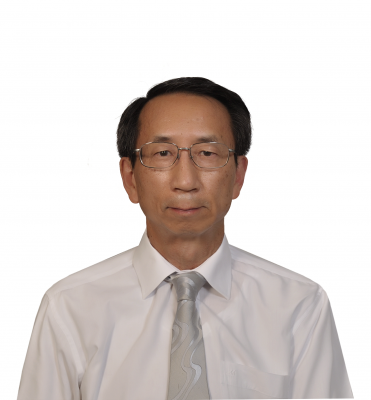
Peter Luh, the SNET Professor in the Department of Electrical and Computer Engineering here at UConn, has recently been elected as the Chair of the IEEE Technical Activities Board (TAB) Periodicals Committee for the 2018-2019 term.
The Institute of Electrical and Electronics Engineers (IEEE) is the world’s largest association of technical professionals, focusing on the advancement of electrical and electronic engineering, computer science, and information technology. The IEEE is cited over three times more often than any other publisher for patents filed with the US Patent Office by the top 40 patenting organizations (1997-2012).
IEEE publications constitute around 30% of the world’s literature in electrical engineering and computer science fields – an immense volume of information. The TAB Periodicals Committee oversees essentially all but a few IEEE periodicals (e.g., IEEE Proceedings, IEEE Spectrum, and IEEE Access) – over 120 academic journals and more than 40 magazines.
It is the duty of the periodicals committee to approve, monitor and review these journals and magazines to ensure their quality and timeliness. Each year, Editors-in-Chief of journals and magazines and Vice Presidents of Publications of IEEE Societies and Councils meet to discuss these publications and their status, and formal reviews are held every five years.
The publications committee consists of the Chair, Immediate Past Chair, 8 Directors or Society/Council Presidents (or their designees), and four additional voting members. Peter Luh, as Chair elected for the 2018-19 term, will be responsible for overseeing proposal developments, approvals, publication reviews, and overall quality and timeliness of IEEE TAB periodicals. The committee and IEEE at large aim to “push frontiers” of electrical engineering and computer science, while dealing with major challenges in academic publications such as emerging areas, competition and open access.
 born in the city of Bangalore in India. Being born and raised on an air force base nudged him to pursue his bachelors in Aerospace Engineering from the Indian Institute of Technology – Bombay (IIT-B). It was there that he realized his interest in robotics and systems engineering. This led him to come to the University of Connecticut (UConn) for his Masters in Electrical and Computer Engineering. At UConn, he works with Dr. Ashwin Dani in the Robotics & Control Lab. His research involves leveraging machine/deep learning techniques for efficient human-robot collaboration.
 innovation,” he said.
 The priority of the UTC-IASE Breakthrough Award is to provide an award to recognize innovative, transformational and disruptive contributions in the field of advanced systems engineering. The amount of the Award shall be $50,000 in the first year the prize is awarded, and may be adjusted with time.
 emical Engineering degree from the University of Minnesota – Twin Cities and a PhD in Chemical Engineering from MIT. His graduate research focused on the development of theory and algorithms for advanced formal methods in robust design and optimal design under uncertainty. Specifically, he developed tools necessary to solve challenging problems in rigorous performance and safety verification of process systems for extreme and hostile environments. Dr. Stuber’s post-doctoral work was as a scientist, engineer, and entrepreneur developing an optimized concentrating solar powered desalination process, launching a start-up company, and piloting the desalination technology for agricultural wastewater reuse in California’s agricultural sector. Driven by the exciting opportunities in pure and applied research, Dr. Stuber decided to make his way back to academia joining the faculty at UConn.